
How to Get Out of Debt Quickly: 6 Effective Strategies
Let's be honest — debt has a way of creeping into your life quietly, and before you know it, it's the first thing you think about when you wake up and the last thing on your mind before bed. Maybe it started with a medical bill you couldn't afford, or a credit card that helped you survive a tough stretch. Maybe it crept up through years of small, reasonable-seeming decisions. Whatever brought you here, the weight of it is real, and it's heavy.

But here's what I want you to know before we dive in: getting out of debt is absolutely possible. People do it every single day — not because they won the lottery or landed a dream salary, but because they made a decision to take control and then stuck with it. It takes time, discipline, and a willingness to look at your finances honestly. But it works.
Below, you'll find six strategies that aren't just financially sound — they're human. They acknowledge that life is messy, money is emotional, and progress isn't always linear. Use these as your roadmap, not a rigid rulebook.
Strategy 1: Get a Full Picture — List Every Debt You Owe
Before you can fight your way out of debt, you need to know exactly what you're up against. This sounds obvious, but many people avoid this step because it's uncomfortable. Seeing the full number staring back at you is unsettling. Do it anyway.
Sit down with a notebook or a spreadsheet and write out every debt you carry: credit cards, student loans, car payments, personal loans, medical bills — everything. For each one, note the total balance, the interest rate, and the minimum monthly payment.
You can't map a route to your destination if you don't know where you're starting from.
This isn't about punishing yourself. It's about clarity. Once you see everything laid out in front of you, something shifts. The vague, looming anxiety of 'I have so much debt' becomes a concrete list of things you can actually address, one by one. That's powerful.
💡 Pro Tip: Use a free tool like Google Sheets or a budgeting app like YNAB or Mint to organize your list and update it regularly as you make payments.
Strategy 2: Attack the Right Debt First — Prioritize by Interest Rate
Once you know what you owe, it's time to choose your battlefield. Not all debt is created equal, and knowing which debts are costing you the most money will help you focus your energy where it matters.
The debt avalanche method — paying off debts with the highest interest rates first — is the mathematically smartest approach. High-interest debt, particularly credit card debt (which can carry rates of 20–30% or higher), is incredibly expensive the longer it lingers. Every month you carry a balance, you're essentially paying the bank a premium for the privilege of owing them money.
Here's how it works in practice: continue making minimum payments on all your debts, but direct any extra money you have toward the debt with the highest interest rate. Once that's paid off, roll that payment amount toward the next highest-rate debt, and so on. This is called a debt avalanche, and it saves you the most money over time.
If you're someone who needs psychological wins to stay motivated, the debt snowball method — paying off the smallest balances first regardless of interest rate — can work just as well emotionally. The "right" method is the one you'll actually stick with.
💡 Important Note: The debt avalanche saves the most money in interest, but the debt snowball can build momentum and confidence. Choose what works for your personality.
Strategy 3: Build a Budget That Works for Real Life
The word "budget" makes a lot of people's eyes glaze over. It sounds like deprivation — a list of things you're not allowed to do. But a good budget isn't a restriction on your life; it's a plan for your money. And when you're in debt, having that plan is non-negotiable.
Start with your income — every source of it, after taxes. Then list your essential expenses: housing, utilities, groceries, transportation, insurance. What's left after those is your discretionary income — and that's where the real work begins.
The goal is to direct as much of that discretionary income as possible toward your debt payments. Even an extra $50 or $100 a month can meaningfully accelerate your payoff timeline and save you hundreds in interest.
A budget isn't about saying no to everything — it's about saying yes to what actually matters.
Be realistic. Don't build a budget so strict that you burn out and abandon it in two weeks. Build in a small amount for things that bring you joy — a coffee, a dinner out once a month. Sustainable progress beats perfect plans that fall apart.
💡 Budgeting Method: Try the 50/30/20 rule as a starting point: 50% of income to needs, 30% to wants, 20% to savings and debt repayment. Adjust the ratios based on your debt urgency.
Strategy 4: Cut the Fat — Eliminate Unnecessary Spending (Temporarily)
This strategy is where a lot of people get uncomfortable, and understandably so. We build our lives around our habits and comforts, and asking you to give some of them up — even temporarily — can feel personal.
But here's a reframe that might help: you're not giving things up. You're making a temporary trade. You're trading a streaming service you barely use for the freedom of a paid-off credit card. You're trading eating out three times a week for the peace of mind that comes with a shrinking debt balance.
Go through your bank and credit card statements from the past two or three months and highlight every non-essential purchase. Look for patterns. Subscriptions you forgot about. Convenience spending that adds up fast. Impulse buys. You might be surprised by what you find — most people are.
Some specific areas to examine include dining out, subscription services (streaming, apps, gym memberships), online shopping, and entertainment. You don't have to cut all of it — even cutting 50% of your discretionary spending can free up significant cash for debt repayment.
💡 Quick Win: Canceling just three unused subscriptions averaging $15/month each frees up $540 over a year — that's a meaningful chunk of debt gone.
Strategy 5: Consider Debt Consolidation — Simplify and Save
If you're juggling multiple debts across several creditors — each with different interest rates, due dates, and payment amounts — debt consolidation might be worth exploring. The basic idea is to combine multiple debts into a single loan, ideally with a lower interest rate, simplifying your payments and potentially saving you money.
There are a few ways to consolidate. A personal loan from a bank or credit union is a common option. A balance transfer credit card with a 0% introductory APR can also work well if you can pay off the balance within the promotional period. A home equity loan or line of credit is another possibility if you own property — though this comes with the risk of putting your home on the line.
The key question to ask before consolidating is: does this actually lower my total cost of borrowing, or does it just spread it out over a longer period? A lower monthly payment isn't always a better deal if it extends your repayment timeline significantly.
Debt consolidation is a tool, not a solution. Used wisely, it can save you thousands. Used carelessly, it can make things worse.
If you're unsure whether consolidation makes sense for your situation, consider speaking with a nonprofit credit counselor. Organizations like the National Foundation for Credit Counseling (NFCC) offer free or low-cost guidance with no strings attached.
💡 Watch Out For: Debt consolidation companies that charge high upfront fees or promise to settle debts for pennies on the dollar. Many are predatory. Stick to reputable, nonprofit credit counseling services.
Strategy 6: Increase Your Income — Even a Little Goes a Long Way
Cutting spending can only take you so far. At some point, there's a floor — there are essentials you simply can't cut. That's when it's time to look at the other side of the equation: earning more.
The rise of the gig economy has made this more accessible than ever. Depending on your skills and schedule, there are dozens of ways to bring in extra income. Freelancing in your professional field (writing, design, accounting, coding) is often the highest-earning option. Driving for a rideshare company, delivering food, tutoring, pet sitting, and selling unused items are also solid options.
Even an extra $200 to $400 a month can dramatically change your debt repayment timeline. Direct every dollar of that additional income straight to your highest-interest debt. Don't let lifestyle inflation absorb it.
If a traditional side hustle doesn't appeal to you, think creatively. Could you negotiate a raise at work? Sell items you no longer need? Rent out a spare room? Offer services in your neighborhood? There's no shortage of ways to find extra income if you look for them.
💡 Mindset Shift: Think of extra income not as a windfall but as a dedicated debt-fighting fund. Even small, consistent amounts compound into real progress over time.
Final Thoughts: The Journey Is Worth It
Getting out of debt is rarely quick, and it's rarely easy. There will be months when you make great progress and months when an unexpected expense throws you off course. That's life — and it doesn't mean you've failed.
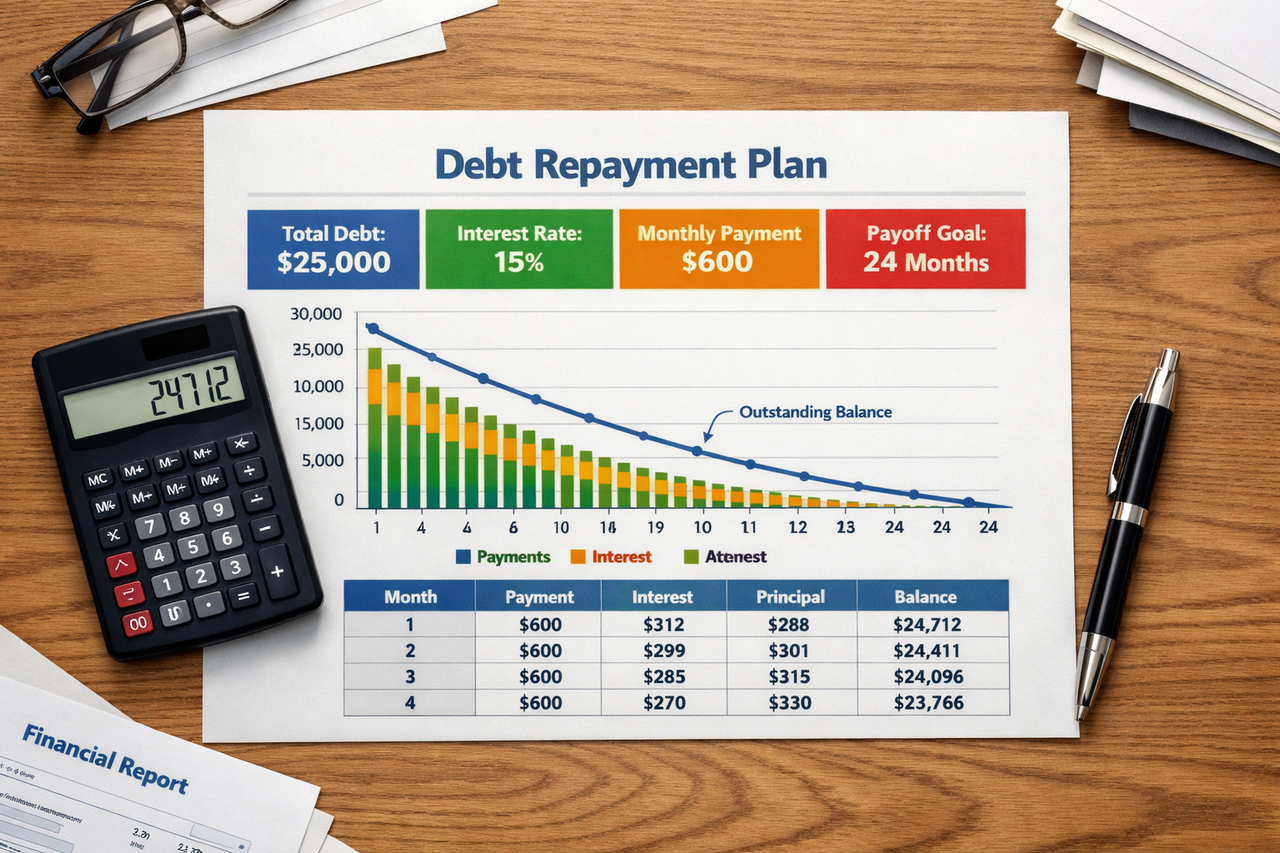
What matters most is that you keep going. Every payment, no matter how small, moves the needle. Every dollar you don't spend on something you don't need is a dollar closer to financial freedom. The habits you build during this process — budgeting, intentional spending, income awareness — will serve you long after the last debt is paid.
The best time to start was yesterday. The second best time is today.
You don't have to be perfect. You just have to start. Pull out that notebook, write down what you owe, and take the first step. The version of you that lives without the weight of debt is waiting on the other side of this process — and it's absolutely worth the effort to get there.
Remember: If debt feels truly overwhelming, you don't have to navigate it alone. Nonprofit credit counselors, financial advisors, and community resources exist to help. There is no shame in asking for help — only wisdom.
Discussion (0)
Leave a Reply
No comments yet. Be the first to share your thoughts!