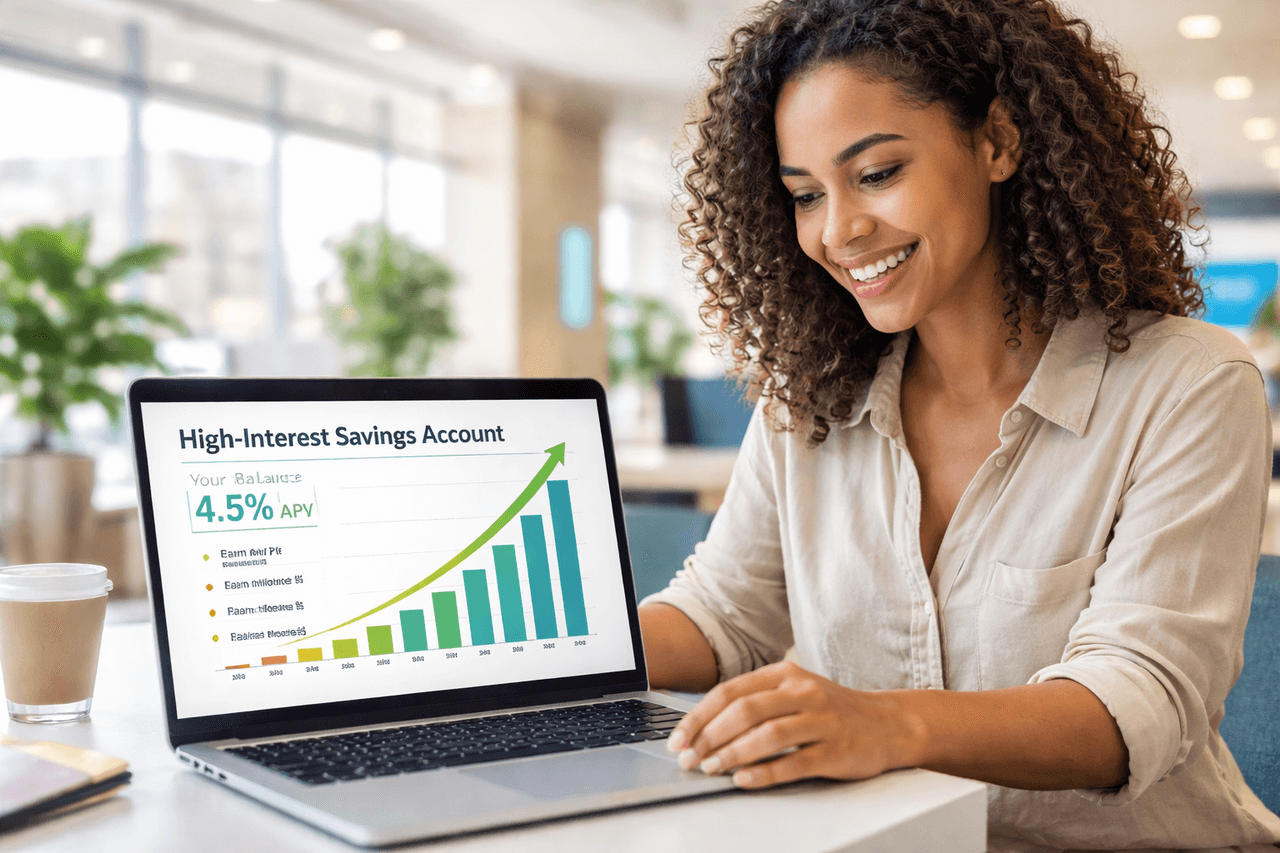
The Best High-Interest Savings Accounts in 2026
Let's be honest — most of us have money sitting in a standard savings account collecting dust, earning next to nothing. If that sounds familiar, you're definitely not alone. But here's the thing: 2026 has some genuinely exciting options for people who want their savings to actually go somewhere. Whether you're building an emergency fund, saving for a big purchase, or simply trying to make smarter financial moves, the right high-interest savings account can make a meaningful difference over time.

In this guide, we'll walk through the best high-interest savings options available in 2026 — what they are, how they work, and who they're best suited for. No jargon, no fluff. Just clear, useful information to help you make a confident decision.
Online Banks — Your Best Friend in the Digital Age
If you haven't already made the shift to an online bank, 2026 might be the year to seriously consider it. Online banks consistently offer some of the highest interest rates in the market — and the reason is surprisingly simple.
Without the overhead of physical branches, ATM networks, and large staff, online banks operate on leaner budgets. Those savings? They pass them directly on to you in the form of higher annual percentage yields (APYs). We're talking rates that can be anywhere from 10 to 20 times higher than what a traditional bank might offer on a standard savings account.
Why online banks stand out:
No monthly fees or very low account minimums
Higher APYs due to reduced operational costs
24/7 digital access from anywhere in the world
Easy transfers to external accounts
FDIC insured (in the US) for peace of mind
Best for: People comfortable with digital banking who want maximum returns without the hassle of maintaining a branch relationship.
Credit Unions — The Hidden Gem of Personal Finance
Credit unions have been quietly delivering excellent value to their members for decades. Unlike traditional banks, which are for-profit institutions answering to shareholders, credit unions are member-owned cooperatives. That means profits are reinvested back into the institution — often in the form of better rates, lower fees, and friendlier service.
In 2026, many local and regional credit unions are offering savings rates that genuinely compete with online banks — especially for members who maintain regular activity or meet certain relationship criteria. Add to that the personal touch of a community institution that actually knows your name, and you have a pretty compelling case.
What makes credit unions worth your attention:
Competitive interest rates, especially for loyal members
Lower or zero fees on many account types
Personalized service — you're a member, not a number
Community-focused mission and values
Federally insured up to $250,000 by the NCUA
Best for: People who value community banking, relationship-based service, and competitive rates combined.
High-Yield Checking Accounts — Earning While You Spend
Here's a type of account that often gets overlooked: high-yield checking. Yes, a checking account — the one you use for day-to-day expenses — can actually earn you a meaningful rate of interest. The catch? There are usually a few boxes to tick.
These accounts typically require you to make a minimum number of debit card transactions per month, maintain a direct deposit, or log in online a certain number of times. If you meet those conditions, you can unlock rates that rival dedicated savings accounts — often without having to move your money at all.
Things to know before opening one:
Interest rates are often tiered — higher rates on lower balances
Monthly conditions must typically be met to earn the top rate
Great for people who already have regular spending activity
Some accounts offer ATM fee reimbursements as a bonus perk
Check the fine print — missing conditions can drop your rate significantly
Best for: Active account users who prefer simplicity and want to earn interest without maintaining a separate savings account.
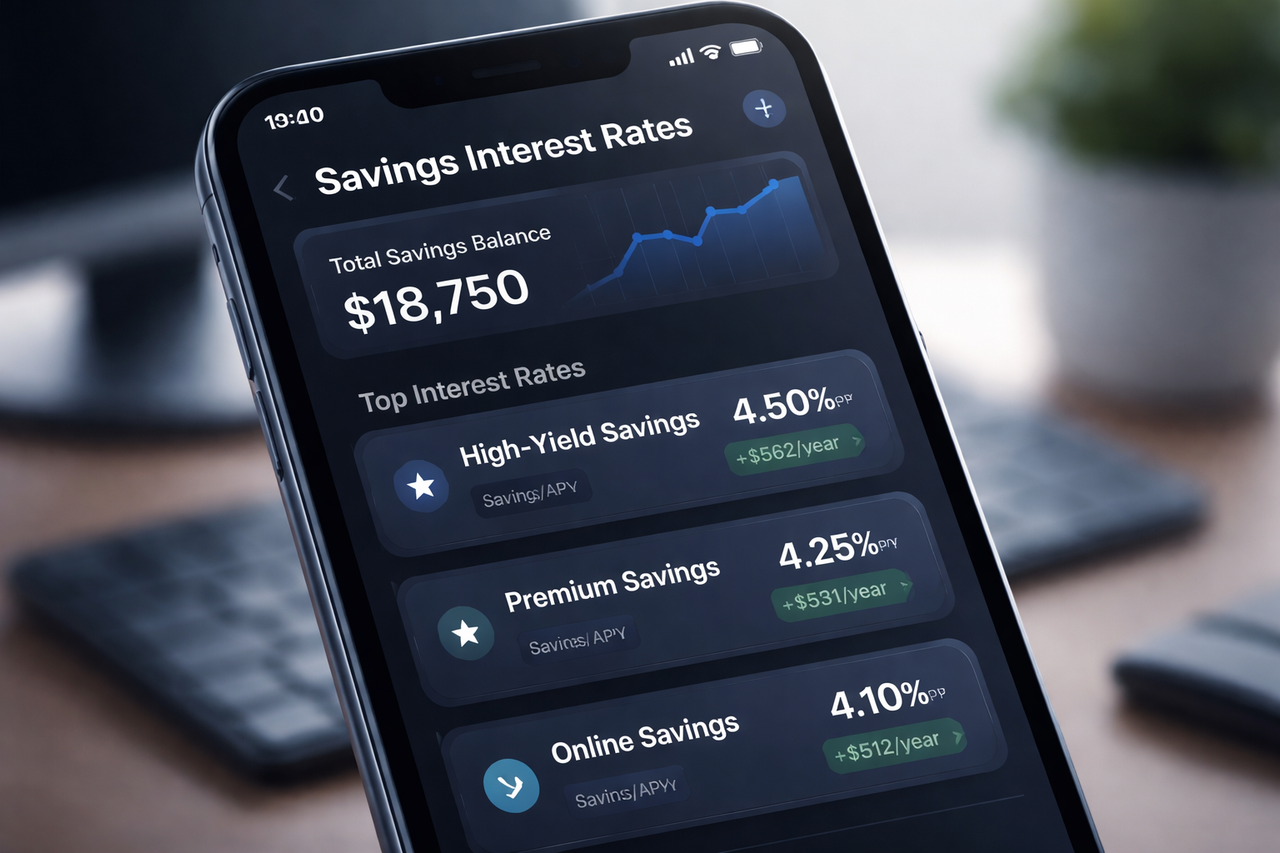
Certificates of Deposit (CDs) — Lock It In, Let It Grow
If you're the kind of person who doesn't need to touch a chunk of money for a set period of time, a Certificate of Deposit (CD) is one of the most reliable ways to earn guaranteed interest. The concept is refreshingly straightforward: you agree to leave your money with the bank for a fixed term — ranging from a few months to several years — and in return, the bank rewards you with a locked-in interest rate.
In 2026, CDs are particularly attractive for longer terms, where rates tend to be more generous. The trade-off, of course, is liquidity — withdrawing early usually means paying a penalty. But if you can commit to the term, the guaranteed returns make CDs a satisfying option for disciplined savers.
Key CD features to understand:
Fixed interest rate for the entire term — no surprises
Higher rates typically offered for longer commitments
Early withdrawal penalties can reduce your earnings
CD laddering strategies can help balance liquidity and returns
Available at banks, credit unions, and online institutions
Best for: Savers with a clear timeline who want guaranteed growth and aren't worried about needing immediate access to their funds.
Money Market Accounts — Flexibility Meets Higher Returns
Think of a money market account as the best of both worlds: you get the higher interest rates typically associated with savings accounts, combined with the flexibility to access your funds more freely — often including check-writing privileges or a debit card.
Money market accounts are particularly popular for emergency funds and short-term savings goals, precisely because they keep your money accessible while still allowing it to grow at a competitive rate. Many financial institutions do require a higher minimum balance to open and maintain these accounts, so they tend to suit people who already have a solid financial foundation.
What sets money market accounts apart:
Higher interest than standard savings accounts
Check-writing and debit card access in many cases
Tiered interest rates that reward higher balances
Excellent for emergency funds you need at a moment's notice
FDIC or NCUA insured just like a regular savings account
Best for: Savers who need a combination of accessibility and growth — ideal for emergency reserves or goals with flexible timelines.
At a Glance: Quick Comparison
Use this table to quickly see how each option stacks up:
Account Type | Typical Rate | Liquidity | Min. Balance | Best For |
|---|---|---|---|---|
Online Banks | High | Moderate | Low / None | Max returns |
Credit Unions | Moderate–High | Moderate | Low | Community feel |
High-Yield Checking | Moderate–High | High | Varies | Active spenders |
CDs | High (fixed) | Low | Moderate | Long-term savers |
Money Market | Moderate–High | High | Moderate–High | Emergency funds |
Final Thoughts — Your Money Deserves Better
Here's the bottom line: the era of leaving your savings to languish in a low-interest account is well and truly over — at least for those who know their options. Whether you're drawn to the high rates of an online bank, the community warmth of a credit union, the simplicity of a high-yield checking account, the guaranteed growth of a CD, or the flexibility of a money market account, there's an option in 2026 that fits your lifestyle and goals.
The most important step? Don't overthink it. Start by comparing the current APYs at a few institutions, check the conditions, and make sure any account you consider is federally insured. Even a small shift — moving your savings to an account earning 4% instead of 0.5% — can add up to hundreds of dollars over just a couple of years.
Your future self will thank you for making the move today. After all, the best time to start earning more on your savings was yesterday — but the second-best time is right now.
This article is for informational purposes only and does not constitute financial advice. Please consult a qualified financial advisor before making any investment decisions.
Discussion (0)
Leave a Reply
No comments yet. Be the first to share your thoughts!